
When AI Isn't The Answer

The Push for AI
Everyone wants to automate. AI is flashy, it's cheap, and it's always there. But some of the most expensive AI mistakes we've seen aren't failed implementations. They're the ones that worked exactly as designed - and still made things worse.
The real issue? AI is a poor substitute for trust.
The customer service trap
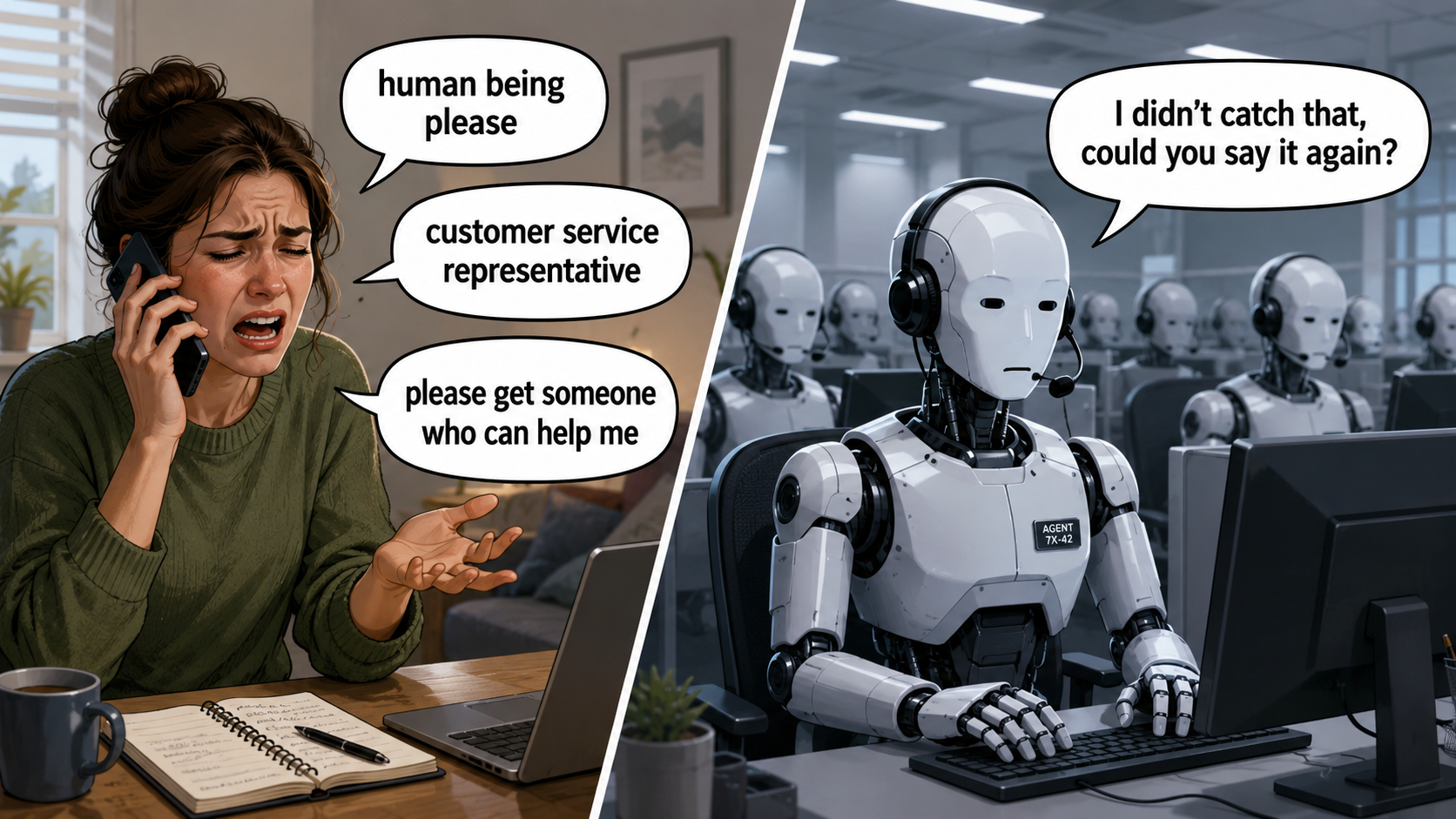
Right now, one of the most popular AI deployments in business is the one least likely to succeed: automated customer service.
Companies are replacing support desks with voice agents and chat bots because the math looks compelling. Fewer headcount. Faster response times. 24/7 coverage.
But think about why people contact customer service in the first place. Something went wrong. They're frustrated, confused, or out of money. They need someone to hear them — and then fix it.
What they get instead is a bot that mishears their name, loops them through a decision tree, and, if they're lucky, eventually transfers them to a person who can actually solve their problem.
The damage isn't just a bad experience. It's a broken relationship with a customer who was already on the fence. The very department businesses are rushing to automate is the one that holds the most direct line to retention.
Where people aren't optional
AI is the wrong answer anytime the offering is trust, support, and authenticity. In these cases, AI automation degrades the value offered rather than enhancing it.
That includes:
- Customer service
- Sales relationships built on accountability and trust
- Services and care given during critical life challenges
- Mentorship and personnel development
- Leadership and communication during uncertainty or conflict
These aren't roles where better technology can fill in for humanity. They're roles where the humanity is the service.
Clarity before automation
The bigger issue we see isn't companies automating the wrong things. It's companies automating before they understand what they're actually doing.
When a process is unclear — when ownership is ambiguous, when the steps live in someone's head, when the output depends on unspoken judgment — automating it doesn't fix it. It locks in the confusion and runs it at scale.
The companies that get the most out of AI are the ones who do the harder work first: mapping what actually happens, identifying where the real value is created, and building from a foundation of clarity.
That's the part that requires a thinking partner, not a tool.
What AI strategy can offer
This is the work our Envision engagement is built around. Not recommending software. Not deploying agents. Sitting alongside your leadership team and asking the questions that tell you where AI can help and where it will just get in the way.
Most businesses don't need more AI. They need a clearer picture of their operations first. Once that exists, the right automations become obvious. And the ones that would have caused problems are easy to rule out.
If you're being told that AI should touch every part of your business, you're talking to someone with something to sell. The honest answer is more selective than that — and a lot more valuable.
Mosaic Solutions is an AI strategy and automation consultancy based in the Cedar Rapids/Iowa City Corridor. Our Envision engagement gives growing businesses access to senior AI advice without a full-time hire. Get in touch.